A Day in the Light
How the Skydial got here: the first sketches, the mechanical road not taken, the long argument about color, and the working model it was all tuned on.
ScrollEarly versions
The first versions were drawn in a web browser. Each one took something away from the one before: the digital clock, then the printed times, then the numbers, until only the sky and one hand were left.
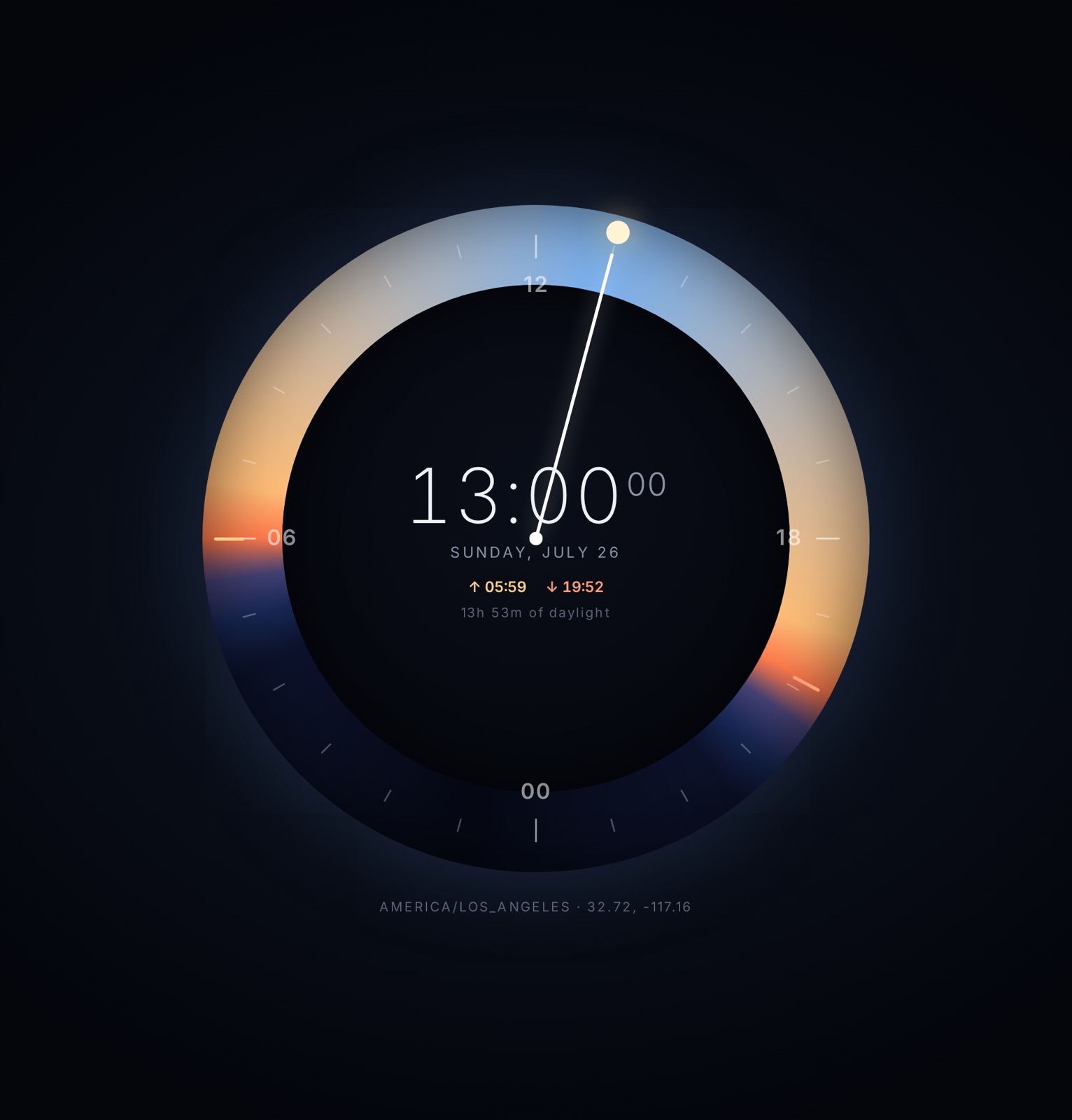 First sketchA ring of sky around a digital clock, with sunrise and sunset printed as times.
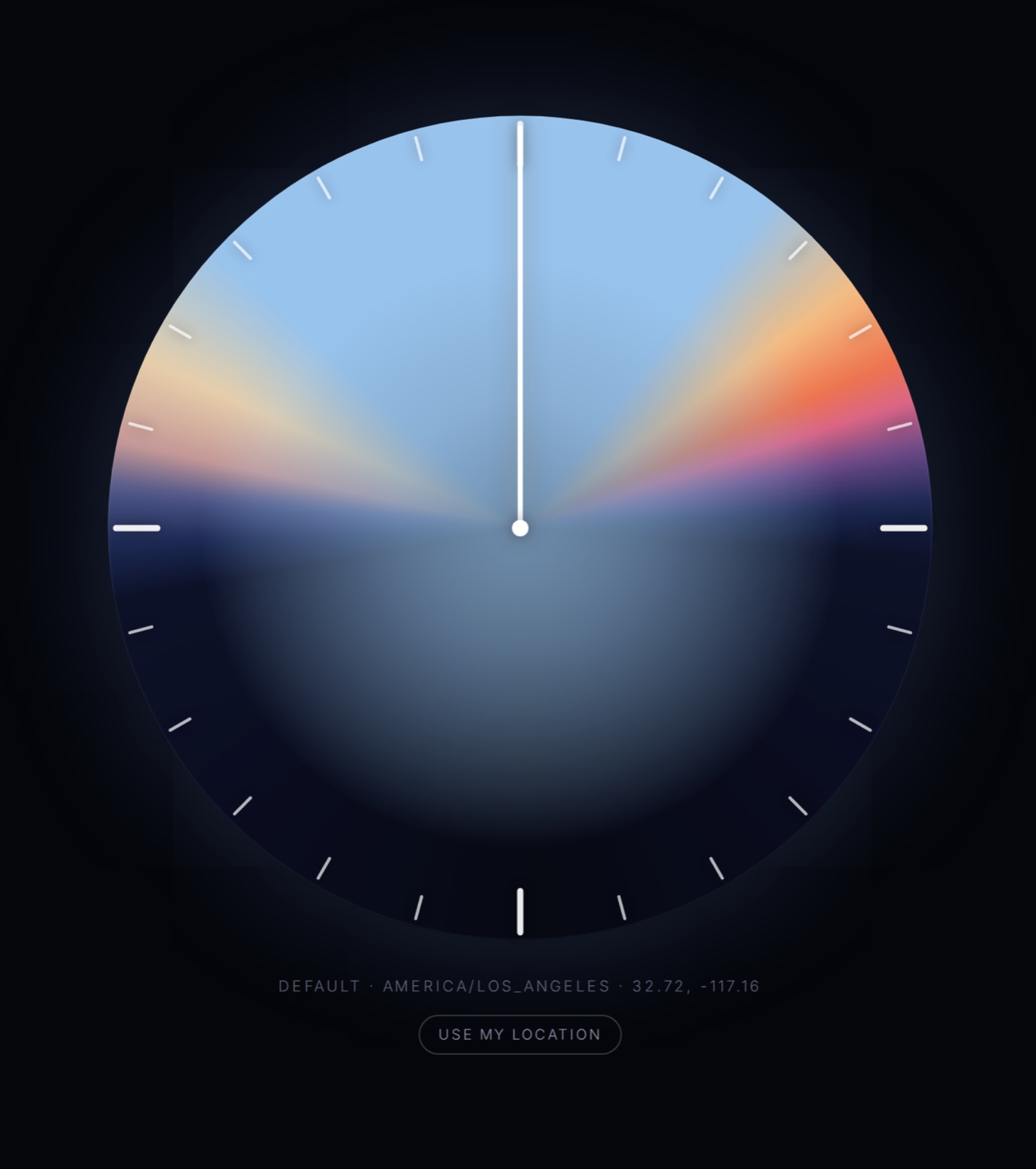 28 JulyThe sky fills the whole face. One hand, hour ticks, no digits.
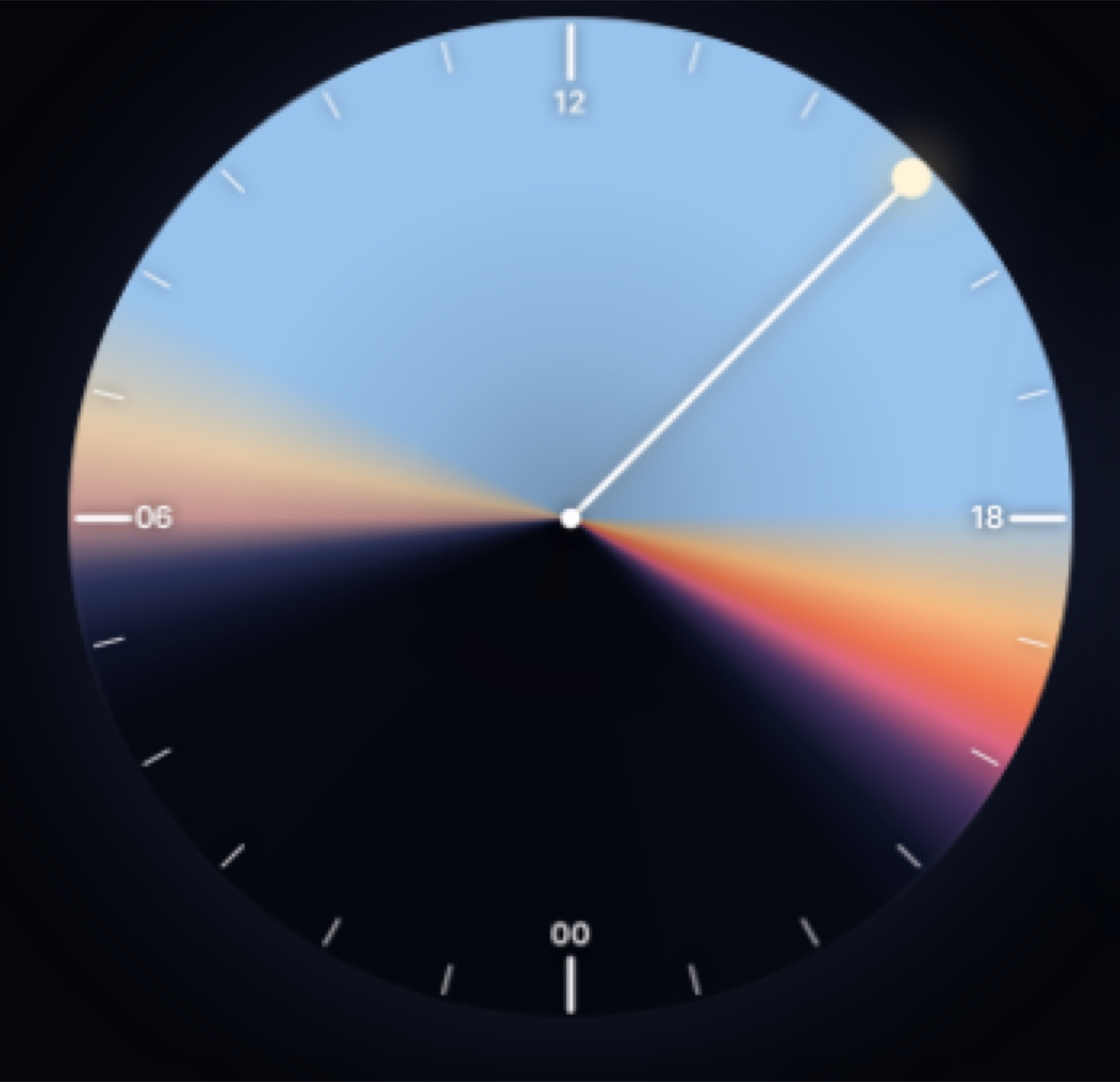 29 JulyA trial with hour numbers and a sun at the tip of the hand.
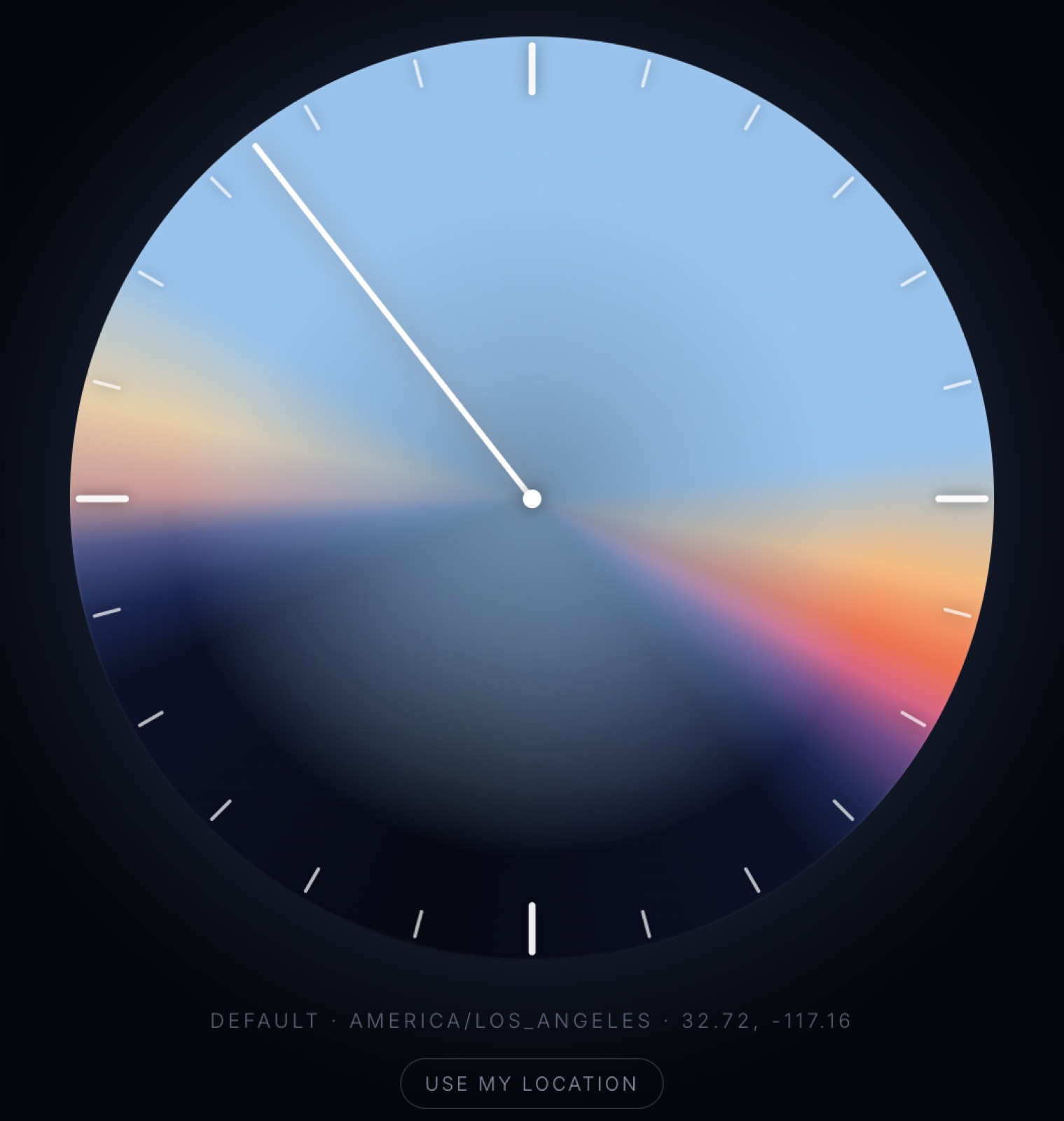 29 JulyThe same day, with the numbers gone again.
 29 JulyEverything taken off. Only the sky.
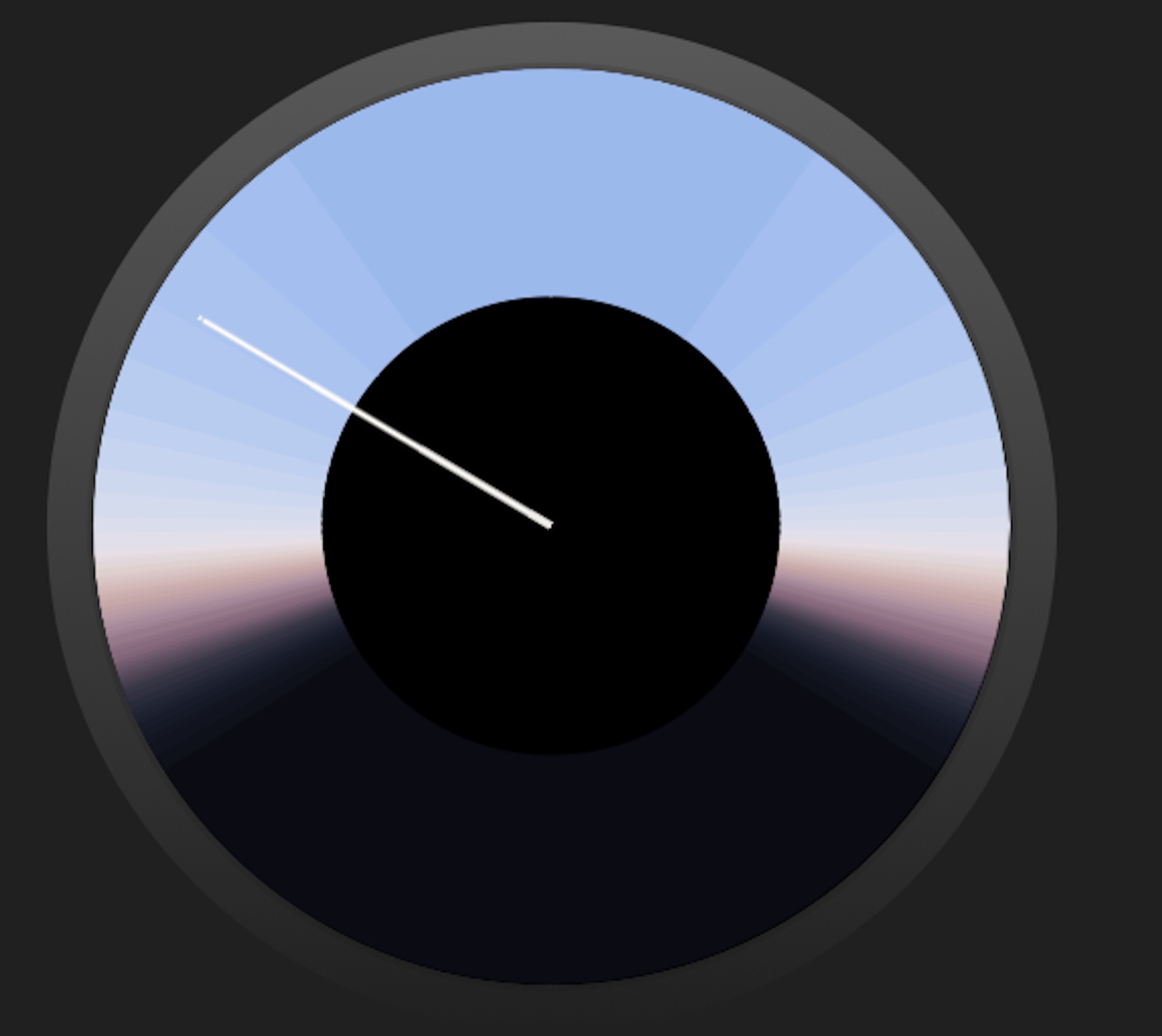 10 AugustA ring-shaped trial on a watch-sized screen.
Exploring the mechanical version
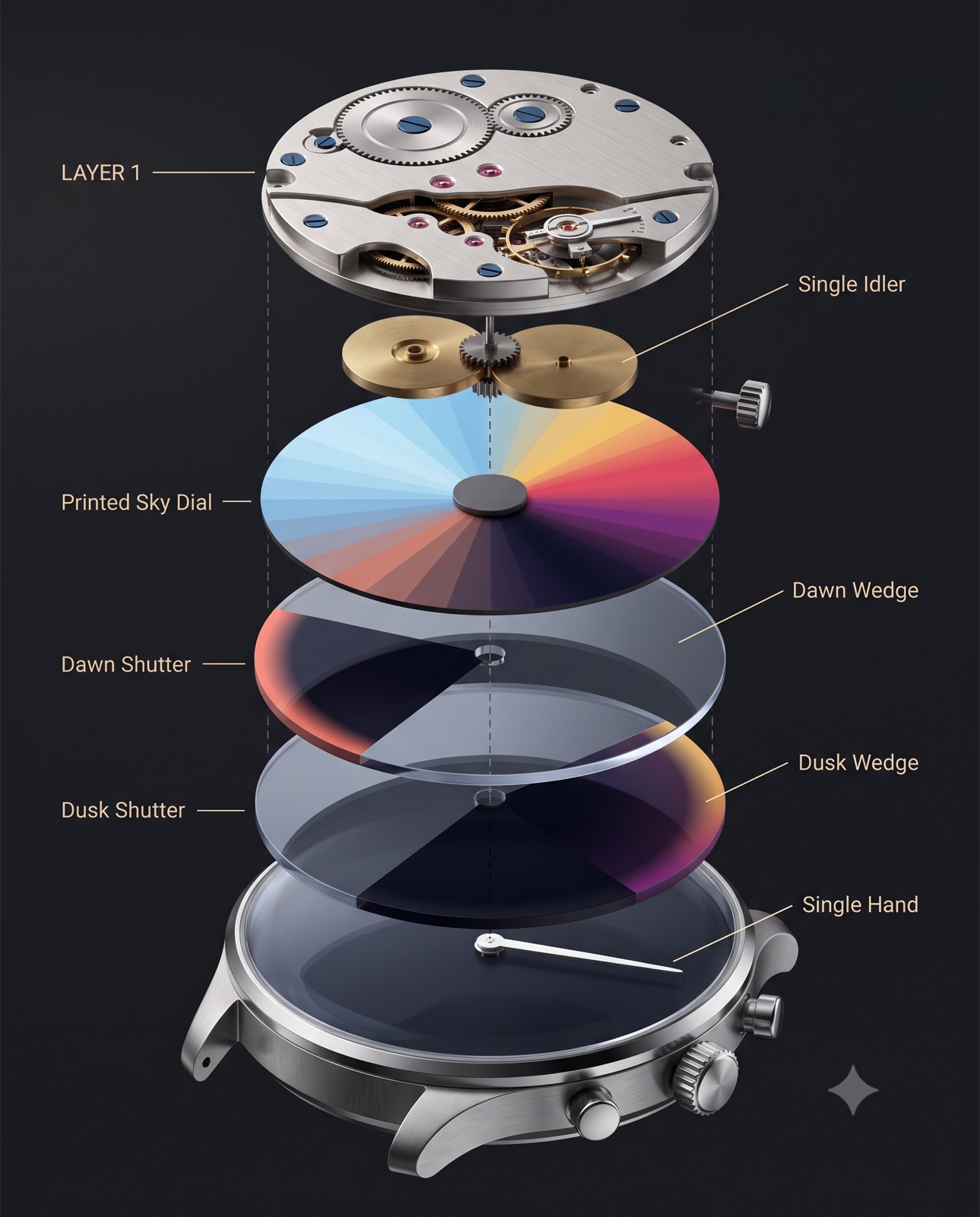
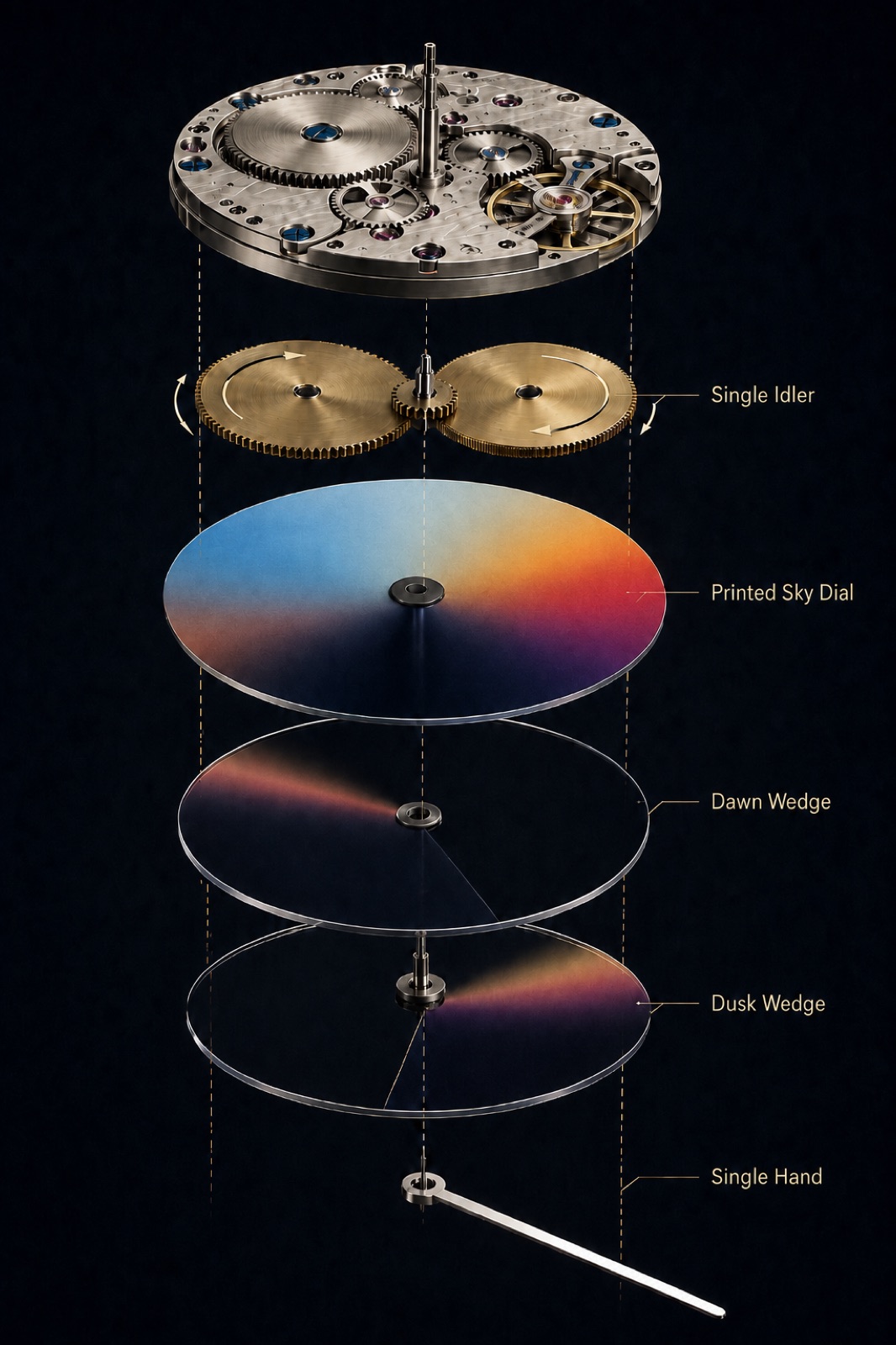
For a while the Skydial was going to be mechanical: a printed sky dial under two shutters of glass, one for dawn and one for dusk, and a single hand. These are concept renders made with an image generator, not photographs. That build was set down, and the sky moved to a screen.
Showing how we evaluated color
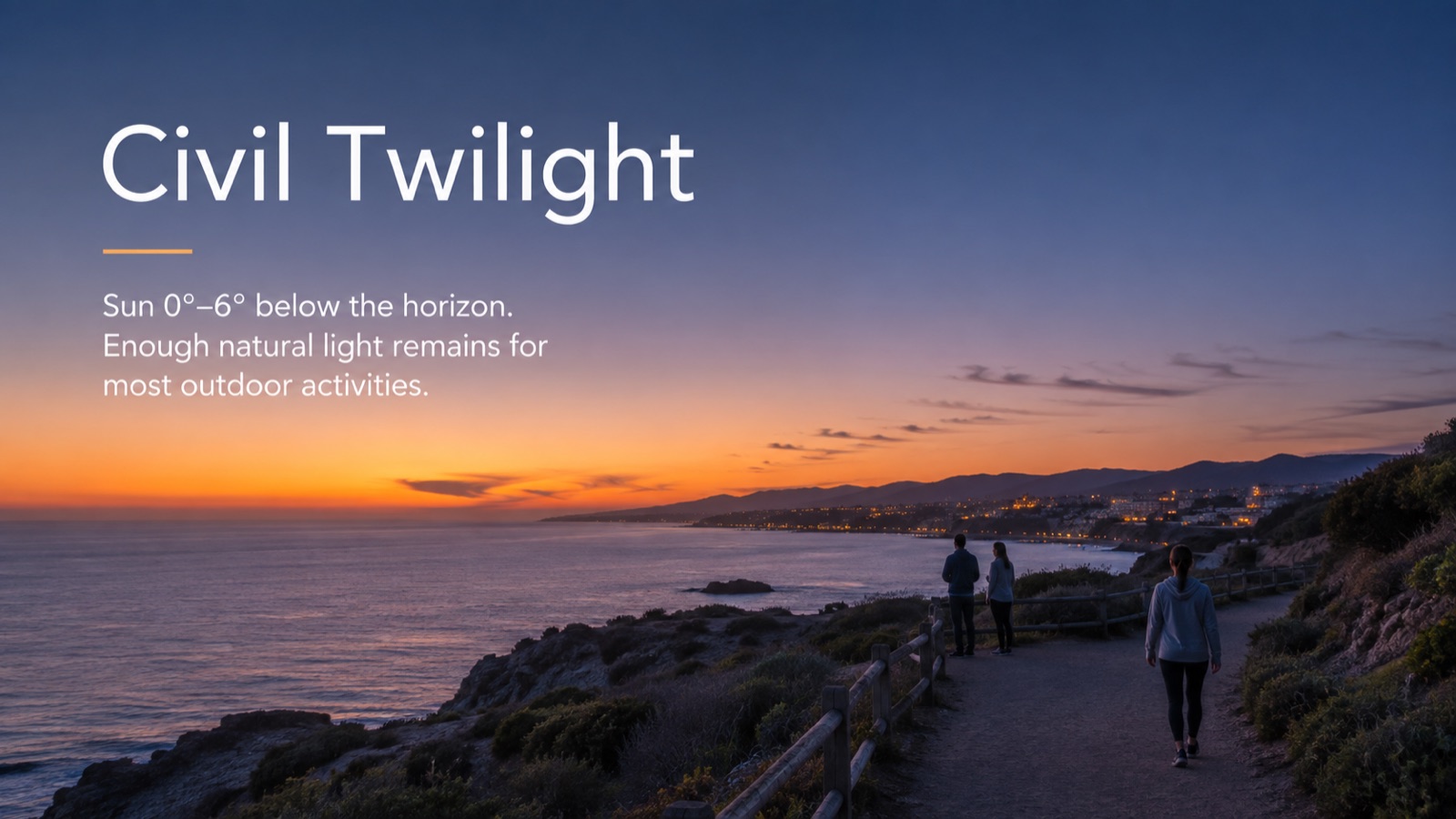
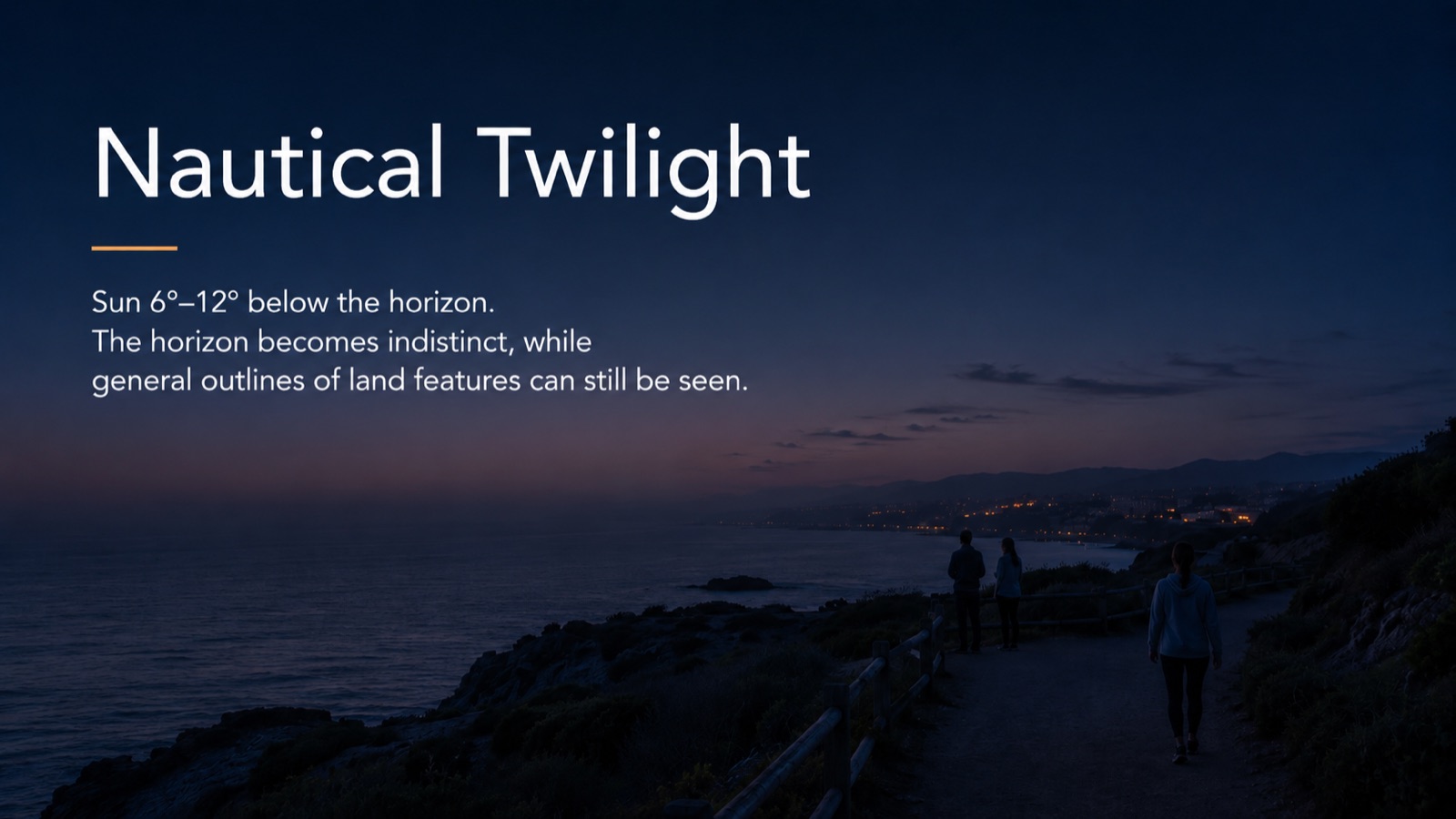
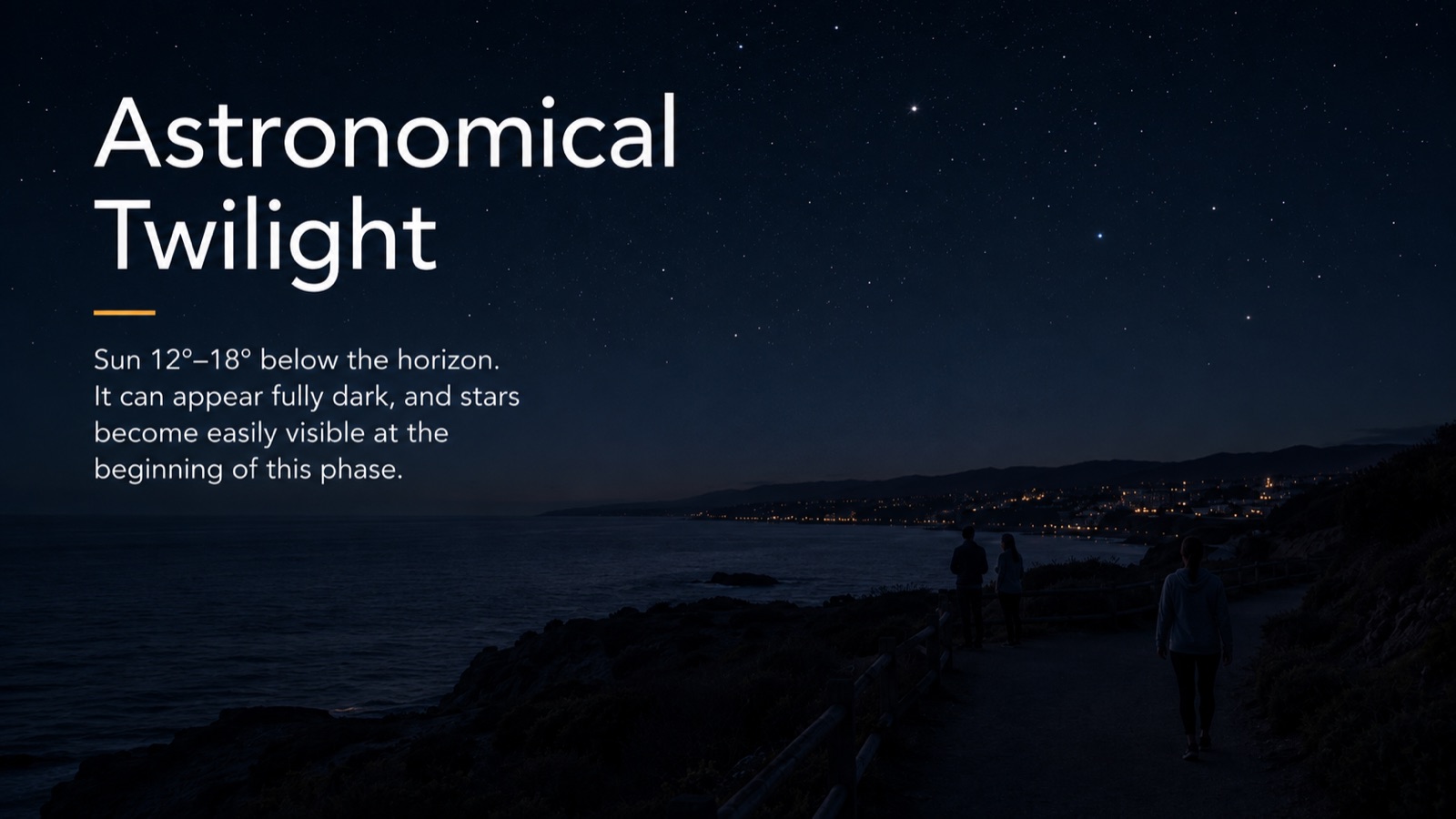
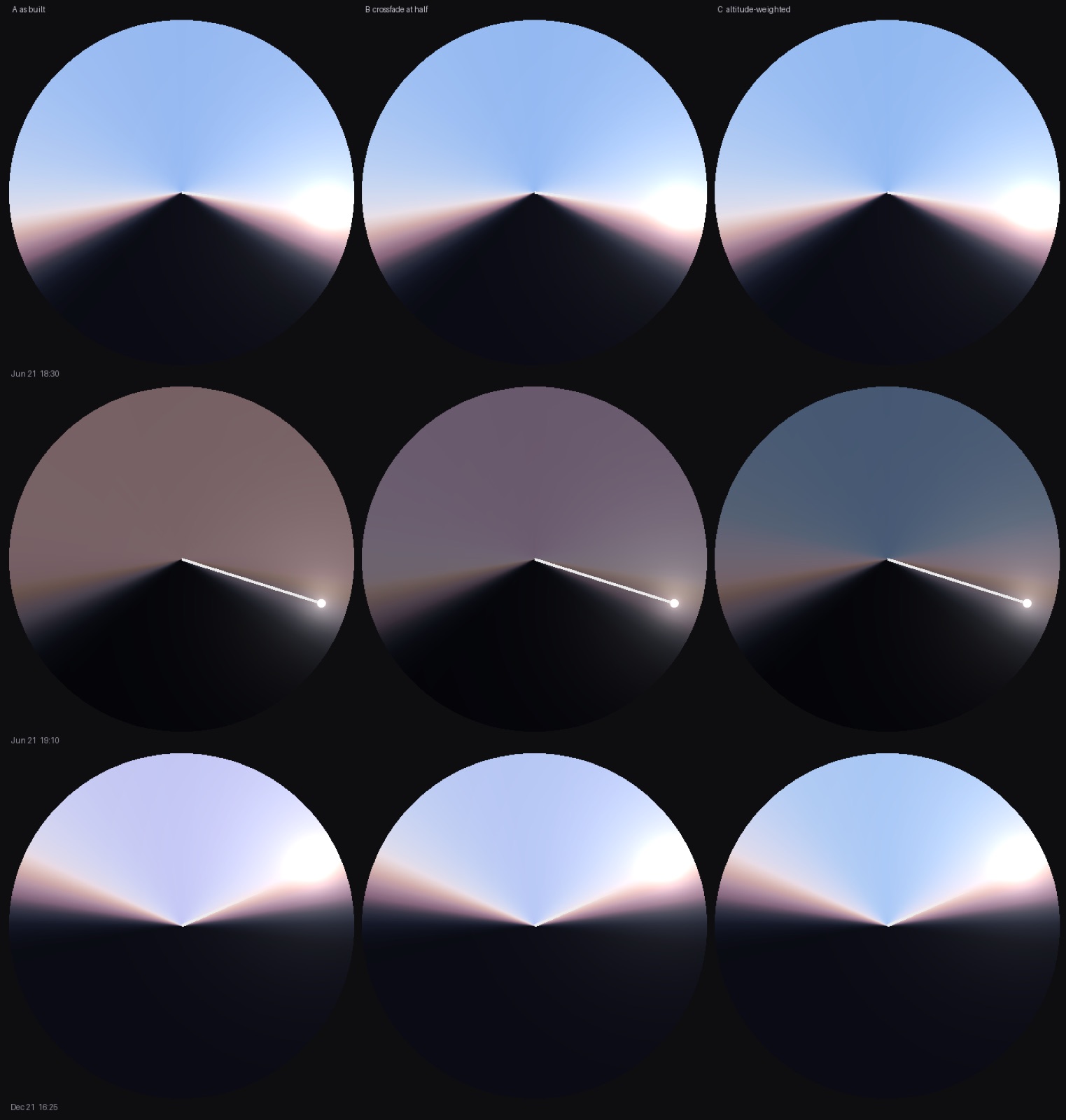
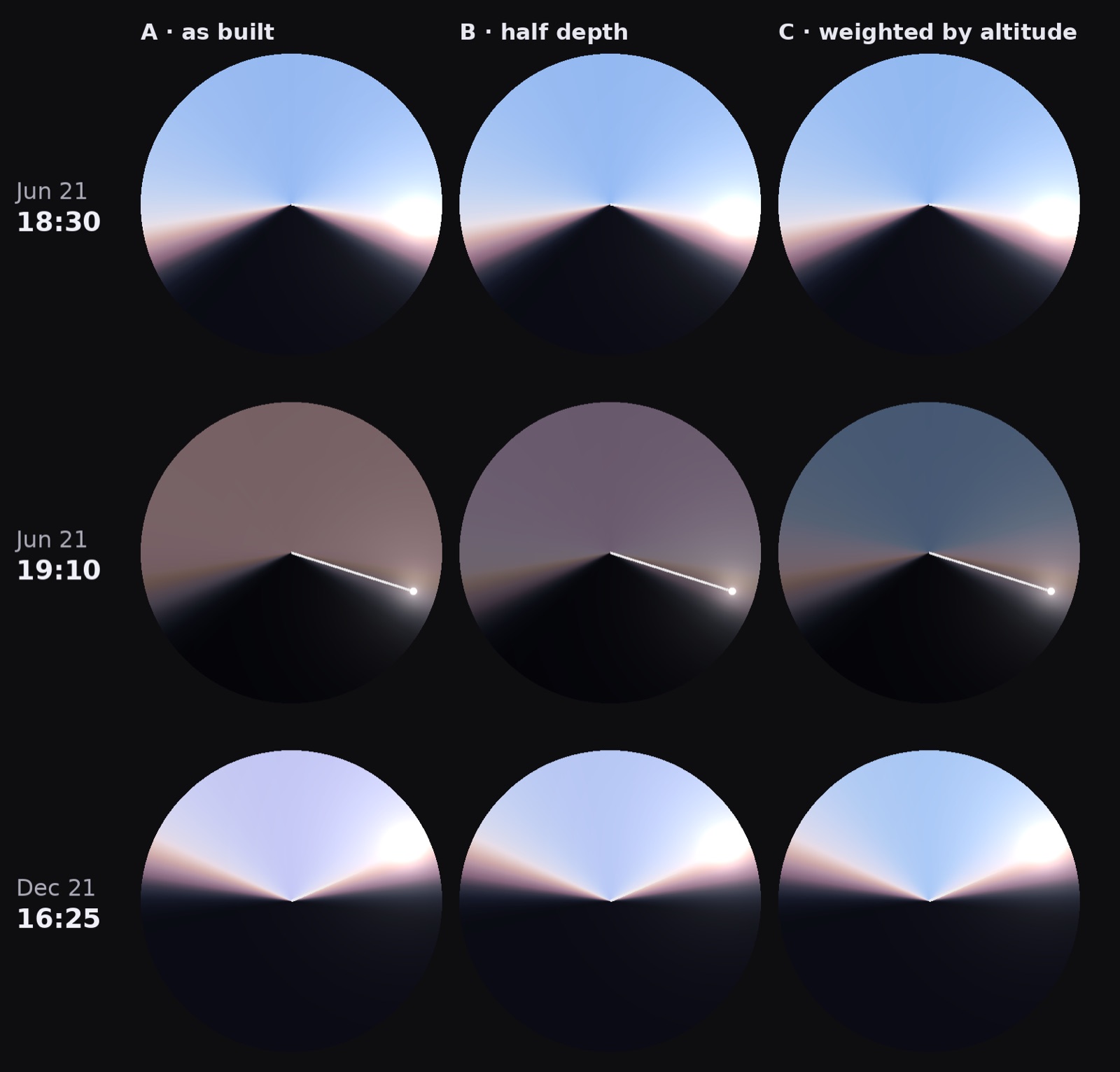
Color took the longest. First came learning the three twilights by name and by how deep the sun sits below the horizon. Then the same moment of the same day was drawn several ways and set side by side, because the only fair way to choose between skies is to look at them together.
Everything that had to be decided
This is the model the dial was tuned on, running live. Every switch and slider beside it is something that had to be looked at, argued over and settled.
controls in this build. Move any of them.
The model is running, one day every 48 seconds. Change anything on the right and the dial answers at once. This is build 5.8, the one that has been shown publicly; the Skydial itself runs a later build.